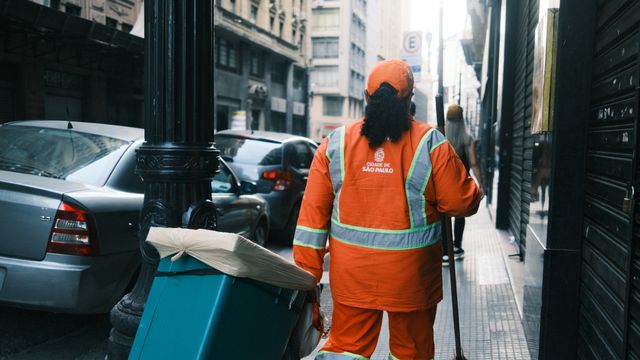
A wrapper thrown out in a suburban car park can be washed up onto a bayside beach following a single storm. According to the data provided by Melbourne Water, around 90 per cent of the waste collected on the beaches around Port Phillip Bay originates in stormwater runoff. This rubbish travels over ten kilometres before it gets there. In this respect, street sweeping in Melbourne constitutes the first step in separating a busy street from the bay.
From Street to Bay: The Journey
Water does not discriminate about what it collects on its way. All the leaves, dust, cigarette butts, food wrappers and any other waste are carried away by water in the gutters, unless regular street cleaning Melbourne programs remove them first.
In Melbourne, stormwater goes through its own system of channels independent of the household sewage. As a result, almost all of it bypasses treatment plants and ends up in creeks, rivers, and ultimately the bay. While some councils install litter traps along the way, stormwater can flow right over them during the rainstorm.
Thus, anything that is on the street when the rains come is likely to get there, while removal of waste from the street is much easier than retrieving it from the stream.
Beyond Wrappers: Sweepers’ Debris
While bottles and other waste are obvious, it is sometimes less obvious things that become the greatest threat. Sweepers face a lot of different types of street debris:
Special attention should be paid to the fine sediments. They settle in the drainage pits and, accumulating over time, gradually narrow the pipes beneath. Thus, a partially clogged pit will cause water to flow over the intersection during summer showers.
On the other hand, tyre rubber poses another challenge. It breaks into tiny particles, which can easily get into runoff and stay in the water for a long time.
Building Sites and Mud on Public Roads
New estates popping up across Melbourne’s growth zones are bringing a constant parade of trucks, and every exit offers a mud-spewing highway escape. The clay dirt gets packed into tyre treads on site, then dumps itself onto the very first stretch of public road.
The Environment Protection Act 2017 has a ‘general environmental duty’ on businesses to cut the risk of causing harm. For builders and contractors, that duty extends to keeping an eye on sediment leaving a site and making sure it doesn’t end up in the drains. Not only that, but mud on the bitumen also makes the roads super slippery, which is a major worry for cyclists and motorbike riders who have to brake hard in light rain.
So what do experienced site managers do? They plan to sweep up the messiest bits of the job, usually excavation, concrete pours and those wet weeks when everything gets messy. That way they can clean up more often when the worst of the mess is happening and avoid having to do an emergency clean-up when the neighbours or council start complaining.
Melbourne’s Seasons Bring the Chaos
Autumn throws Melbourne’s leafy suburbs into a real mess; it’s like a slow-moving river of brown and gold along every kerb. All those leaves get swept up into the side entry pits, cover up the grates and make the rainwater go flying across the footpaths.
Then in summer, the leaves get swapped out for dust. Those hot north winds come in and blow all sorts of grit across industrial estates, covering up whole loading bays and car parks in a fine grey film. And as soon as the rain comes along, that dust is gone again, but if you do nothing to clean it up, it all just gets washed into the drainage system.
Timing really does make all the difference here. A good sweep before the storms hit stops the mess in its tracks, but if you only clean up afterwards, you’re just dealing with what the water left behind.
Accidents Happen
And they don’t usually happen at a convenient time. A burst water main, a leaking fuel tank or a split compactor bin can make a tidy driveway into a real hazard in just a few hours.
So you need to act fast to protect people, property and the drains below. If you let oil spill out across a shopping centre car park, you can get falls and injury claims in a matter of hours. And liquids drifting towards a pit can become an environmental problem that the authorities take very seriously indeed.
One thing that tends to make things worse is the knee-jerk reaction to reach for the hose and just flush the debris into the gutter; it’s like handing the problem straight over to the stormwater network.
Choosing the Right Machine for the Job
You don’t want to use the wrong sweeper for the job and get poor results. Different surfaces call for different sweepers, and it’s really practical to have the right one. Mechanical broom sweepers are good for heavy, coarse material on roads and construction sites. Vacuum sweepers do a great job on finer particles on smoother surfaces like car parks and warehouse yards. Regenerative air machines are good for big areas with fine sediment like large paved lots.
So if you’re responsible for a site, sharpen up your plan with a few simple questions:
The best street cleaning is the kind that nobody even notices. Drains flow freely, the roads stay grippy and the bay gets a little less of the city’s leftovers.