Hip arthroscopy sits in a specific and often underappreciated space in orthopaedic care. Patients sometimes arrive at a consultation having assumed it is either a minor procedure with minimal consequence or something closer to a joint replacement. It is neither, and understanding where it actually sits shapes how patients engage with their options.
What the Procedure Does?
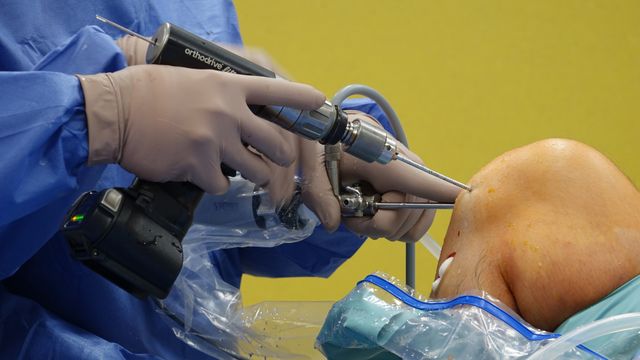
Hip arthroscopy gives a surgeon direct visual access to the inside of the hip joint through a small camera, called an arthroscope, inserted through incisions measured in millimetres. Fine instruments are introduced through additional small portals to carry out whatever surgical work is needed, whether that involves reshaping bone, trimming soft tissue or repairing structural damage to the joint.
The hip is a ball and socket joint with a tight surrounding capsule, which makes arthroscopic access more technically demanding than the knee. The joint must be carefully distracted during the procedure to create working space. Surgery is performed under general or spinal anaesthesia and typically takes between one and two hours, depending on the complexity and the number of structures requiring attention.
The Conditions It Addresses
Several hip conditions are treated using the arthroscopic approach. Femoroacetabular Impingement (FAI), for example, is when the femoral head and the edges of the acetabular socket keep getting in the way of each other when you’re moving your hip. This is often a problem with bony spurs that cause no big deal at first but can lead to a lot of pain, especially if you’re the type of person who sits for long amounts of time, squats a lot or does a lot of hip flexion. We’re starting to see that this is a pretty common cause of hip pain in people who are younger and active, and if we don’t address it, it could cause a lot of long-term damage to the joint.
Labral tears are another problem; it’s when the ring of cartilage that lines the edge of the socket gets damaged. This is a pretty big deal because the labrum acts kind of like a seal and helps distribute the loads on the joint, so when it gets torn, you get a whole lot of pain, a feeling like it’s catching and instability that can change depending on where you are and what you’re doing. Loose bodies are always a problem too; that’s when small bits of bone or cartilage break off and get stuck in the joint. All of these things can be treated using the hip arthroscopy Melbourne approach.
How Is FAI Managed Arthroscopically?
FAI has been officially recognised as a condition that can be treated arthroscopically, which means it’s been added to the list of treatments that are covered by Medicare in Australia. This is a big deal because now more people can afford to get it fixed.
When we do surgery for FAI, we basically just remove the bits of bone that are causing the problem so that the hip can move freely again. If there is a labral tear at the same time, we usually do the repair in the same operation.
Labral Repair: The Options
If we find out you’ve got a labral tear, the next step is to figure out whether it’s repairable or not. It really depends on how bad the tear is and whether the bit of tissue that’s left over is in any kind of shape. If it is, we can use small anchors to stitch it back in place and help it heal over time. But if it’s too bad, the best we can do is clean it up so that it doesn’t cause any more problems.
We try to fix the labrum if we can because it’s such a big part of getting the hip to move smoothly and distributing the weight evenly across the joint. The Medicare Benefits Schedule outlines which arthroscopic hip procedures are covered, including those related to FAI.
What Recovery Involves?
The good news is that because the incisions are so small, you don’t have to spend a lot of time in hospital recovering from hip arthroscopy and it doesn’t require you to do a lot of major muscle work to get back on your feet. You might need to use crutches for a bit after the operation, but how long depends on what actually got done during surgery. If you had a labral repair for example, it will take a bit longer to get back to normal because the tissue needs a bit of time to get strong again.
We start getting you moving early on; first gentle movements and then gradually working on strengthening the muscles around your hip. And then eventually, when you’re ready, you can get back to most of your normal activities. But the timeline for all of this is going to depend on what specifically got done and what your doctor thinks you’re ready for.
What Comes Before the Surgical Decision?
Hip arthroscopy is definitely not a primary option to try out. Usually, clinical examination, weight-bearing X-rays and MRI, sometimes accompanied by an arthrogram to study the soft tissues in detail, precede the suggestion of surgery. Physiotherapy and anti-inflammatory treatment are tried out before the need for hip arthroscopy arises. The decision to perform hip arthroscopy is always based on the results of the imaging, the involvement of certain structures in pathology, and an explanation of why the patient experiences such problems.