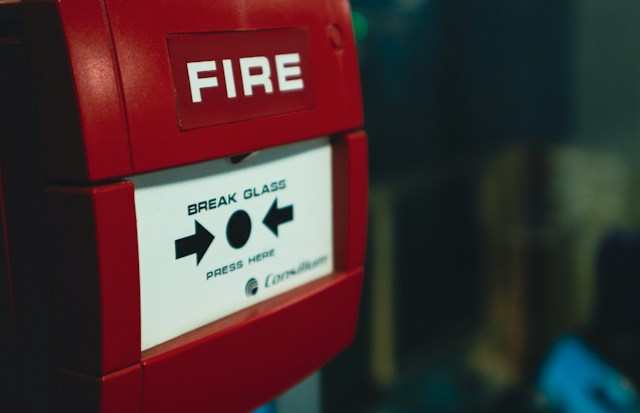
A building without a fire detection system gives a fire minutes of unchallenged time before anyone knows it is there. A building with a well-designed system gives that fire seconds. That gap, measured in the time between ignition and suppression, is where lives are saved or lost and where property damage moves from manageable to catastrophic. AFAC’s Strategic Directions Achievement Report for 2025 documents the continued expansion of fire and emergency services across Australia in response to a growing fire risk environment, and for property owners in Melbourne and Victoria, early detection is not a feature to consider but a legal and practical obligation that the building stock now carries more broadly than at any point before.
Smoke Detection Versus Heat Detection: What Each Technology Does
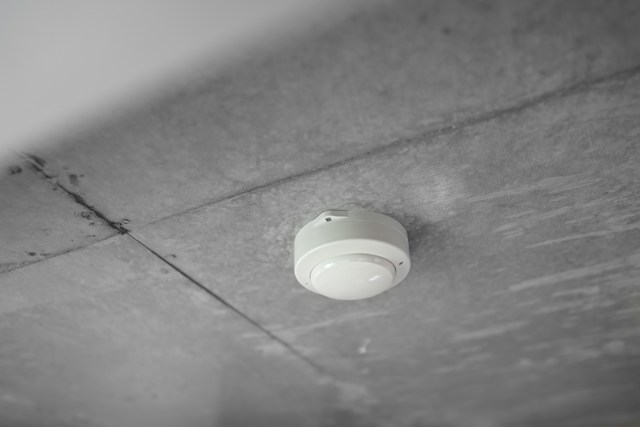
Ionisation smoke detectors contain a small radioactive source that ionises the air between two charged plates; when smoke particles interrupt the current between those plates, the alarm activates. These units respond fastest to flaming, fast-moving fires that produce relatively light smoke early in their development. Photoelectric smoke detectors work differently, using a light beam and a sensor inside the unit where smoke particles scatter the beam toward the sensor and trigger the alarm. This makes them more responsive to slow-building, smouldering fires that produce dense smoke well before an open flame appears, which is the type of fire most likely to develop unseen in a residential or commercial building overnight. Australian Standard AS 3786 governs smoke alarm requirements and specifies photoelectric-type detectors as the required technology for residential applications across most Australian jurisdictions following regulatory changes driven by research into domestic fire fatalities. Heat detectors respond to temperature rather than airborne particles and suit environments like commercial kitchens, laundries and dusty workshops where smoke from normal operations would cause constant false alarms; multi-sensor detectors combine two or more technologies and have become the standard for fire detection services in buildings seeking broader coverage across different fire types.
Addressable Versus Conventional Fire Alarm Systems
In a standard fire alarm system, a building will be divided into zones with each zone being wired via a single circuit such that when a detector within the zone activates, the panel displays the zone but does not show the particular device. In an addressable system, however, every single detector, call point and module within the building gets its unique identification such that the panel displays the exact device that got activated by name and unit number, which will guide the firefighters on where exactly within the building to proceed. For big commercial buildings, offices, aged care homes and industrial buildings, however, accuracy is not an extra-cost feature but a basic requirement whereas a small building with one room per zone will do just fine with a standard system. The difference in the cost of installing the two systems is real but then again it needs to be considered in light of their operational benefits in buildings whose false alarm calls for evacuation of hundreds of people.
Maintenance, Testing and Australian Compliance Requirements
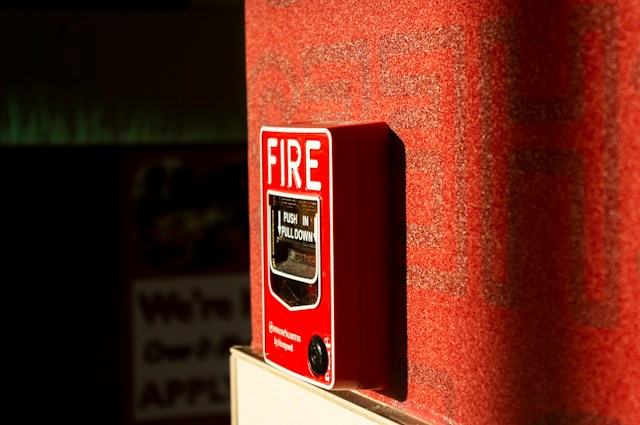
The Australian Standard AS 1851 provides very clear inspection, testing and servicing frequency criteria for fire alarm and detection systems, and these standards exist because an unmaintained detection system is an unreliable one. The need for battery back-up testing is an obvious one, since a battery which tests satisfactorily at the time of installation may fail in three years’ time if it hasn’t been maintained properly. Call points, the red break-glass buttons attached to corridor walls, are to be checked to ensure that they send the correct signal to the panel, because call points often escape regular maintenance schedules.
Integration with Other Fire Safety Systems
Modern detection systems are designed to work in conjunction with sprinkler pre-action systems, stairwell pressurisation systems, emergency lighting and mechanical smoke exhaust systems, not just as standalone pieces of hardware, and it is the integration that poses the toughest design challenges. Activation by detection can result in automatic closure of fire doors using door release systems, activation of stairwell pressurisation fans and shutdown of air-conditioning systems which might otherwise spread the smoke around a building’s ductwork. Where there are aged care residents or other NDIS clients within a building, detection to notification time is crucial, and systems must offer notification in multiple modes; for example, in addition to a sound alarm, strobe lights must also be provided to accommodate people with hearing impairment.
What Melbourne’s Climate Adds to the Design Brief?
There are certain aspects of Melbourne’s climate which require particular attention when designing detection systems which are not covered by generic specifications. Detection sensitivity in areas which are not temperature-controlled is affected during high humidity periods, battery back-up operation is affected in winter periods in Melbourne due to low temperatures, and bushfire season is becoming more relevant than ever for Melbourne outskirts, as distant bushfire smoke can trigger alarms in systems not designed to accommodate such a scenario. For properties located in Melbourne seaside suburbs, corrosion-resistant detector housings and panels are a must.